

The Flyers

Oklahoma’s Golden Age Aviators and the Sky They Claimed
By Tony Caldwell, Founder — The Caldwell Collection at Mustang Field
Every museum is really about people. Ours happens to be full of airplanes — beautiful ones, old ones, machines that still fly and still make your heart rate climb when they light up a radial engine on a Saturday morning. But the airplanes are just the part you can touch. The real collection is the people who flew them.
Oklahoma produced an extraordinary generation of aviators between the end of the First World War and the beginning of the Second. Some of them are famous. Some of them should be. A few of them are connected to the aircraft in this hangar in ways that still surprise me when I trace the threads. This is their story — and if you visit The Caldwell Collection at Mustang Field, you'll find many of them looking back at you from the walls of the Wiley & Will's Hangar Flying Cafe, our recreation of a 1930s cafe complete with period jukebox, malt machine, and a gallery of golden age aviators that I think would have made every one of these people feel right at home.
— The Man Who Built This Place —
I have to start with Clarence Page, because without him, there is no Mustang Field and there is no museum.

Clarence Edgar Page was born on a farm south of Oklahoma City on February 21, 1897. He saw his first airplane fly in 1910, when he was thirteen years old. By the time the First World War ended, he was a pilot in the Army Air Service. After the war, he barnstormed on weekends with a group that included, among others, a young one-eyed Oklahoman named Wiley Post.
But Page wasn't just a pilot. He was a builder. He served on the Aviation Committee of the Oklahoma City Chamber of Commerce and helped establish the city's early municipal airports. Then, as war came again, he did something remarkable: he founded the Oklahoma Air College, won a contract with the U.S. Army, and built two airfields to train military pilots. The first was Cimarron Field, which opened in October 1941. The second was Mustang Field — four miles south of El Reno — which opened in 1943.
That's our hangar. That's where you're standing when you visit The Caldwell Collection. Clarence Page built it.
His training operation ran approximately 500 cadets at each field, with roughly 100 Fairchild PT-19 trainers — open cockpit, inline engine, the sound of which we know well, because we have a PT-19 in the collection today. By the time the program wound down in 1944, Page had trained 8,500 pilots for the Army Air Forces.

One other thing that's important to any of us who love to fly antique airplanes. He saved the Continental, Jacobs and other engines that we use to power our airplanes today. After the war he bought up all the surplus he could through his company Page Industries and sold them to crop dusters and restorers. The legacy of that collection is still with us today and when you need a motor, or a part, you're likely getting it from one of the businesses still thriving because of Page's foresight.
They called him "Mr. Oklahoma Aviation." He went on to become the driving force behind the Oklahoma Air and Space Museum and Hall of Fame, serving as its director until he retired in 1988 at the age of 91. Cimarron Field was renamed Clarence E. Page Municipal Airport in his honor. He was a member of the OX-5 Club, the Order of Daedalians, and the Quiet Birdmen — organizations that, if you know what they are, tell you everything about the man.
He died on February 13, 1989. He was 91 years old and had been in aviation for seventy-nine of them.
— THE ONE EYED PILOT AND OKLAHOMA'S FAVORITE SON —

You cannot tell the story of Oklahoma aviation without telling the story of Wiley Post and Will Rogers together, because that's how the story ends — on a mudflat near Point Barrow, Alaska, on August 15, 1935 — and because the friendship between the two of them says something essential about what Oklahoma was in the 1930s.
Wiley Hardeman Post was born in Grand Saline, Texas, on November 22, 1898, but his family moved to Oklahoma when he was five, and Oklahoma claimed him completely. He lost his left eye in an oilfield accident in 1926 and used the $1,800 insurance settlement to buy his first airplane. That's the kind of cost-benefit analysis only a pilot would make.
In 1931, Post and his navigator Harold Gatty flew a Lockheed Vega named Winnie Mae around the world in eight days, fifteen hours, and fifty-one minutes. Two years later, Post did it again — solo. Seven days, eighteen hours, forty-nine minutes. First person in history to fly solo around the world. He flew the same airplane both times.
But the records were almost the least of it. Post discovered the jet stream — the high-altitude rivers of air that every commercial flight you've ever taken uses to save fuel and time. He pioneered the pressure suit, working with the B.F. Goodrich Company to build a device that let him fly above 50,000 feet over Bartlesville, Oklahoma, in 1934. He was, in every meaningful sense, the first astronaut — a man who went higher than anyone had gone and needed a suit to survive the trip.
Will Rogers needs no introduction in Oklahoma. Born on November 4, 1879, as a citizen of the Cherokee Nation in Indian Territory, he became the most famous entertainer in America — humorist, actor, newspaper columnist, radio personality, and a man who loved flying with a passion that matched Post's own. Rogers made seventy-one films, wrote over four thousand syndicated columns, and traveled around the world three times.
They died together on August 15, 1935, when Post's hybrid Lockheed aircraft — a Vega fuselage fitted with Sirius wings and floats — crashed on takeoff from a lagoon near Point Barrow. Post was 36. Rogers was 55.
Wiley Post Airport in Bethany, Oklahoma — just blocks from where Aero Commander would later build the airplane that became Air Force One — bears his name. At The Caldwell Collection, we honor both men in the Wiley & Will's Hangar Flying Cafe, where a mural of Post and Rogers watches over visitors while they sit at a 1930s soda fountain and browse the gallery of golden age aviators that lines the walls. The Winnie Mae herself lives at the Smithsonian, but her spirit is here.
—JERRY SASS AND THE RYAN—
Jerry Sass was Clarence Page's partner — a pilot and co-founder of the Oklahoma Air College that built both Cimarron Field and Mustang Field. Between them, Page and Sass trained thousands of the pilots who flew the war.

Sass flew a 1938 Ryan SCW — a low-wing, all-metal monoplane built by the same company that built the Spirit of St. Louis for Lindbergh. Jerry took it to Florida with him during the war and he and it hunted submarines, with a 100 lb bomb strapped underneath. It is a gorgeous airplane, and it is coming home. We are currently reimporting Sass's Ryan SCW to the United States and to The Caldwell Collection, where it will take its place in the hangar that its owner helped build. Of all the connections between an airplane and its resting place, this one may be the most direct in our entire collection.
—THE YOUNGEST PILOT IN AMERICA—
On September 12, 1929, a thirteen-year-old Chickasaw girl named Eula Pearl Carter soloed an airplane and became the youngest licensed pilot in the United States. Her instructor was Wiley Post.
Pearl Carter Scott — she married later — was born on December 9, 1915. Her father was a rancher and oilman who knew Post, and when Post landed in their field one day, young Pearl talked her way into a ride. Then she talked her way into lessons. Then she soloed before most kids her age had a driver's permit, which in 1929 you couldn't get until you were sixteen anyway.
She went on to become a commercial and stunt pilot by eighteen, flew her own Curtiss Robin, and later served as a Chickasaw legislator from 1983 to 1989. Her life was remarkable enough that Chickasaw Nation Productions made a feature film about it — "Pearl," released in 2010, directed by King Hollis, and filmed in Oklahoma locations including El Reno.
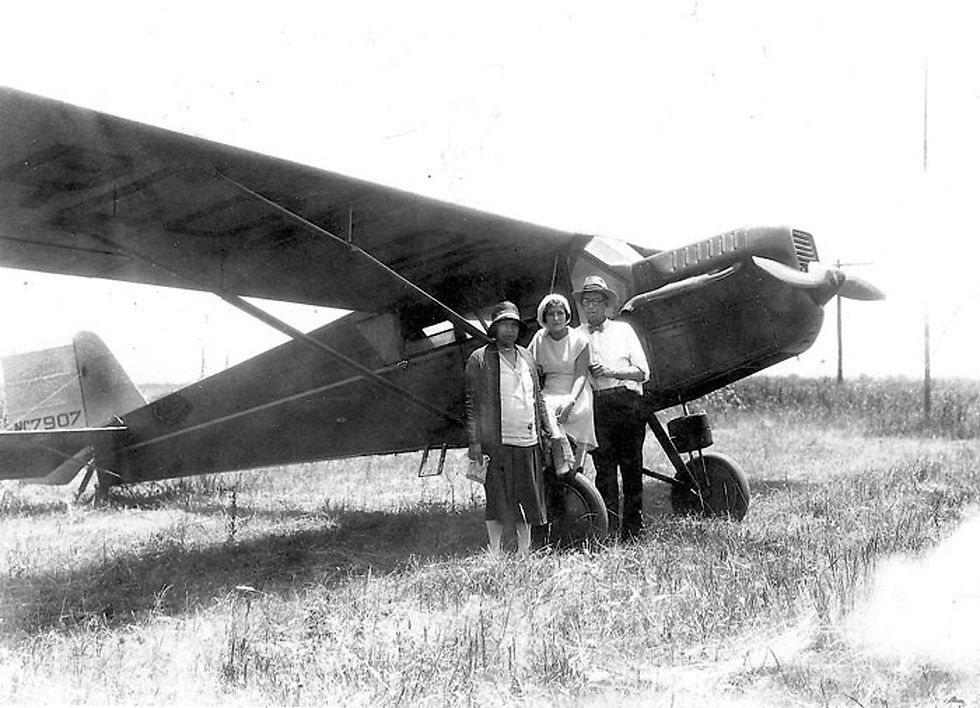
Here's the part that connects her story to this museum directly: the flying sequences in that film were performed by Clay Adams, a retired Delta captain with over fifty thousand flight hours, ten thousand of them in tailwheel airplanes, and experience in roughly 140 different types. Clay flew those movie sequences right here — at El Reno Airport, where Mustang Field stands. Today, Clay is a volunteer pilot for The Caldwell Collection. He flies our airplanes on flying Saturdays.
Pearl Carter Scott died on March 28, 2005. She was 89 years old.
— THE FLYING HOBOES —
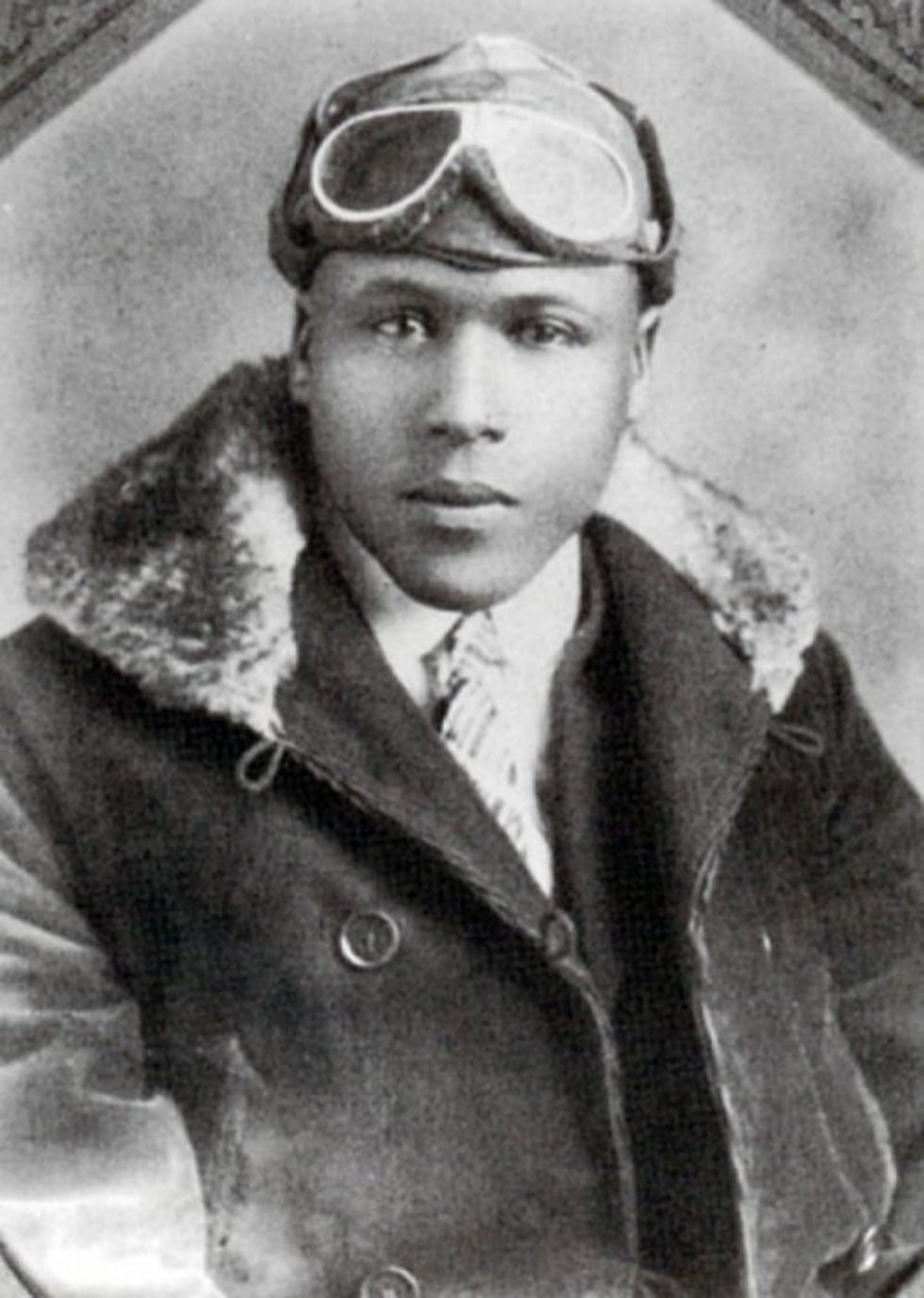
James Herman Banning was born on November 5, 1900, in Canton, Oklahoma Territory — on 160 acres his family held via the Homestead Act. He became the first African American in the United States to earn a pilot's license.
Thomas Cox Allen moved to Oklahoma City at age twelve. He was a gifted mechanic and, as it turned out, a gifted fundraiser.
In September of 1932, the two of them climbed into a used Alexander Eaglerock biplane and set out to fly from Los Angeles to Long Island. They had twenty-five dollars between them. They made the trip in twenty-one days — forty-one hours and twenty-seven minutes in the air — stopping in towns along the way to sell autographed entries in a "Gold Book" they'd tied to the wing, just to pay for fuel. The newspapers called them the Flying Hoboes. It was the first transcontinental flight by African American aviators.
The Eaglerock they flew was patched together from salvaged parts, including Nash automobile valves. It was not a machine that inspired confidence. It was a machine that got the job done anyway.
We have an Alexander Eaglerock in our collection — the same type Banning and Allen flew across America. It's currently being restored but when visitors see it in the hangar, I want them to know this story, because the airplane is handsome enough on its own, but the courage it took to fly one across a segregated country in 1932 on twenty-five dollars is something else entirely.
Banning was killed in an air show accident in San Diego on February 5, 1933. He was denied the opportunity to fly in the show because of his race, and died as a passenger in someone else's airplane. He was thirty-two years old.
Banning was killed in an air show accident in San Diego on February 5, 1933. He was denied the opportunity to fly in the show because of his race, and died as a passenger in someone else's airplane. He was thirty-two years old.
— JACKIE COCHRAN AND THE WOMAN WHO RACED—
Jacqueline Cochran was not born in Oklahoma, but Oklahoma has claimed a piece of her legacy: the Ninety-Nines Museum of Women Pilots in Oklahoma City houses her personal collection — scarves, her lucky bracelet, photographs, records.
In the 1930s, before she became the first woman to break the sound barrier and before she led the Women Airforce Service Pilots through the war, Cochran was a racing pilot. She won the Bendix Trophy in 1938, flying a Seversky P-35 from Burbank to Cleveland. She set speed, altitude, and distance records with a regularity that made the men's record books look incomplete.

The Ninety-Nines — the international organization of women pilots, founded in 1929 with ninety-nine charter members including Amelia Earhart as its first president — moved its headquarters to Oklahoma City in 1955. Three of its charter members were Oklahomans: Joan Fay Shankle Davis of Lawton, Josephine Wood Wallingford of Altus (who joined at seventeen), and Alberta Worley of Oklahoma City, who held the distinction of being the only female Oklahoman with a transport pilot license in 1931.
— THE WOMEN ON THE WALL —
The gallery in our Wiley & Will's Hangar Flying Cafe features portraits of golden age women aviators — women from the 1920s and early 1930s who flew when the sky was new and the ground had very few ideas about what a woman could do with an airplane.

Mary Haizlip is one of them. She was the second woman in the United States to earn a commercial pilot's license, and she held the women's world speed record for seven years — set in 1932 and unbroken until 1939. She was a test pilot for Spartan Aircraft Company in Tulsa, which means she flew the airplanes built in Oklahoma that we wrote about in our last article. She and her husband Jimmy — also a racing pilot who won the 1932 Bendix Trophy — were both instructors at the Spartan School of Aeronautics. First woman inducted into the Oklahoma Aviation and Space Hall of Fame, 1982.
Dorothy Pressler Morgan was the second female pilot in Oklahoma and, in 1933, became the first woman to manage a municipal airport in the United States. Before that, she was a stunt pilot in the Curtiss-Wright Flying Circus — loops, rolls, wingovers, and something the program called the "spin of death." She held a transport license, one of only forty American women to do so. She set an unofficial altitude record of 16,091 feet in a Curtiss-Wright Junior on August 4, 1931. Oklahoma Aviation and Space Hall of Fame Pioneer Award, 1992, posthumously.
Mary Riddle — whose Quinault name was Kus-de-cha, "Kingfisher" — was a Native American aviator who studied at Spartan School of Aeronautics in Tulsa. She also attended parachute jumping school — an all-male program that admitted her only with difficulty. By 1937 she was performing parachute shows across the country.
Bessie Coleman attended what is now Langston University in Oklahoma before running out of money. She went to France, learned to fly, and in 1921 became the first African American woman to earn a pilot's license. She was also of Cherokee and Choctaw heritage. She was killed in a plane crash in 1926, at thirty-four years old, still working toward her dream of opening a flight school for African Americans.
— THE ACE FROM MANGUM —
William Thomas Ponder was born in Mangum, Oklahoma, in 1891. He graduated from Dartmouth in 1917 and went to war. He joined the Lafayette Flying Corps and flew Spad fighters — first with Escadrille SPA 67, then SPA 163, then the 103rd Aero Squadron.

Between May and October of 1918, Ponder shot down six enemy aircraft. On October 23, 1918, near Fontaines, France, he flew into a formation of thirty German aircraft attacking an allied plane. He received the Distinguished Service Cross for that action.
Mangum named its first municipal airfield Ponder Field in his honor. He died in Amarillo on February 27, 1947.
The stories matter as much as the paint.
— COME SEE THEIR STORIES —
The Caldwell Collection at Mustang Field is open every Saturday from 10 am to 2 pm — no appointment required, and admission is always free. We're at 6600 S. Mustang Field Road, Hangar 3, El Reno, Oklahoma, at El Reno Regional Airport.
The Wiley & Will's Hangar Flying Cafe is waiting for you. So is the gallery. So are the airplanes these people flew — or their brothers and sisters. The Fairchild PT-19 that Clarence Page's cadets trained in. The Alexander Eaglerock that Banning and Allen flew across a continent. The Ryan SCW that Jerry Sass owned — coming home soon.
History is people. The airplanes just help you hear them.
▸ The Museum: thecaldwellcollection.org
▸ About Me: tonycaldwell.net
▸ The Dream Wacos Collection: dreamwacos.com
▸ Contact: info@thecaldwellcollection.org
The Caldwell Collection at Mustang Field is a 501(c)(3) nonprofit established in 2024. Aircraft donations are tax-deductible; consult your tax advisor.

Comments